
What Does an Accountant Do for a Small Business? Key Tasks + Benefits

If you're a small business owner wondering whether you need an accountant, you're not alone.
Many small business owners face the same dilemma: how to handle accounting tasks, taxes, and business finances efficiently without getting buried under numbers.
Whether you're just starting out or looking to grow your business, understanding what an accountant does for a small business can help you make smarter financial and business decisions.
Below, we dive deep into what an accountant can do for you, what kind of support they offer, and how to decide whether it's time to hire one.
What Is an Accountant and Why Does Your Small Business Need One?
An accountant is a trained professional who helps individuals and companies organize, manage, and understand their financial data. For small businesses in particular, an accountant can reduce stress, ensure regulatory compliance, and offer insights that help your business grow.
If you're based in the Denver area and wondering whether you need an accountant for your small business, the answer often depends on your time, resources, and financial goals.
The Role of an Accountant in Small Business Operations
A business accountant handles a wide range of responsibilities that go far beyond basic math.
Their work supports your business in key areas such as:
Bookkeeping: Tracking daily transactions, expenses, payments, and income
Tax Preparation and Compliance: Ensuring you file your business taxes correctly and on time
Financial Reporting: Creating income statements, balance sheets, and other reports that show the health of your business
Strategic Advice: Helping you plan for future growth, price your services, and manage business expenses
Let's take a closer look at the many ways an accountant helps small businesses thrive.
How an Accountant Helps Support Your Business
Your business accounting needs will change over time, and that's where an experienced accountant can step in. Here’s how a small business accountant can add value to your business operations:
1. Help You Make Better Business Decisions
An accountant doesn’t just track your numbers—they help you interpret them. Whether you're considering a business loan, launching a new product, or hiring staff, financial data plays a critical role.
A qualified accountant will:
Review your financial statements
Analyze cash flow trends
Look at expenses vs. revenue
Help you make strategic decisions based on actual data
2. File Your Business Taxes Accurately
Filing small business taxes can be complicated, especially if you're a sole proprietorship or limited liability company (LLC). A Certified Public Accountant (CPA) stays updated on tax laws and deductions that apply to your business.
An accountant can help you:
Prepare and file taxes
Minimize your tax liability
Ensure compliance with the IRS
Learn more about finding a professional tax accountant in Denver who understands small business taxes and local regulations.
3. Maintain Accurate Bookkeeping and Records
Bookkeeping is the foundation of small business accounting. A business owner who tries to do it all often ends up with scattered spreadsheets or missing paperwork.
An accountant (or bookkeeper working under an accountant) helps:
Set up bookkeeping systems (such as QuickBooks)
Track inventory and expenses
Reconcile accounts
Maintain audit-ready financial records
And yes, using accounting software like QuickBooks can make things easier—but it's only as good as the data you enter.
4. Prepare Financial Documents and Statements
Need to show an investor your financial health? Or applying for a loan?
Accountants manage critical reports such as:
Balance sheet: Lists your assets, liabilities, and equity
Income statement: Summarizes your revenue and expenses
Cash flow statement: Documents money coming in and going out
These documents are vital for financial reporting, business planning, and attracting investors.
5. Help You Budget and Forecast
Budgeting may seem simple, but creating a financial plan that aligns with growth goals takes expertise. Your accountant can:
Build annual or quarterly budgets
Track performance against targets
Forecast revenue and cash flow
Adjust plans based on market shifts
This is where accounting expertise truly shines—it’s not about guesses, it’s about informed projections that shape strategy.
Types of Accounting Services Available to Small Businesses
Not all accounting services are the same. Depending on your company’s needs, you may work with different professionals or firms. Let’s break down a few common types of accounting:
1. Tax Accounting
Tax accountants specialize in preparing tax returns and ensuring compliance with IRS rules. They keep up with changes in tax law and help you optimize deductions.
2. Managerial Accounting
This type of accounting helps business owners make internal decisions based on financial reporting. It's often used for budgeting, resource allocation, and pricing.
3. Forensic Accounting
Forensic accountants investigate financial discrepancies and fraud. They are also involved in audits and legal disputes.
4. Outsourced Accounting
Don't have the budget for an in-house accountant? Many small businesses use outsourced accounting firms that offer part-time professionals and scalable services.
When to Hire an Accountant for Your Small Business
So, when should you actually hire an accountant for your small business? If any of the following apply, the answer might be now:
You spend too much time on bookkeeping
You’re unsure how to file your business taxes
You want to grow your business but aren’t sure how
You’re applying for a business loan or investor funding
Your finances have become more complex as your business grows
Working with a CPA brings expertise and peace of mind. A CPA must pass the Uniform CPA Exam and meet strict education and license requirements. CPAs are accountants, but not all accountants are CPAs.
What Kind of Accountant Should You Hire?
Choosing the right type of accountant depends on your business needs:
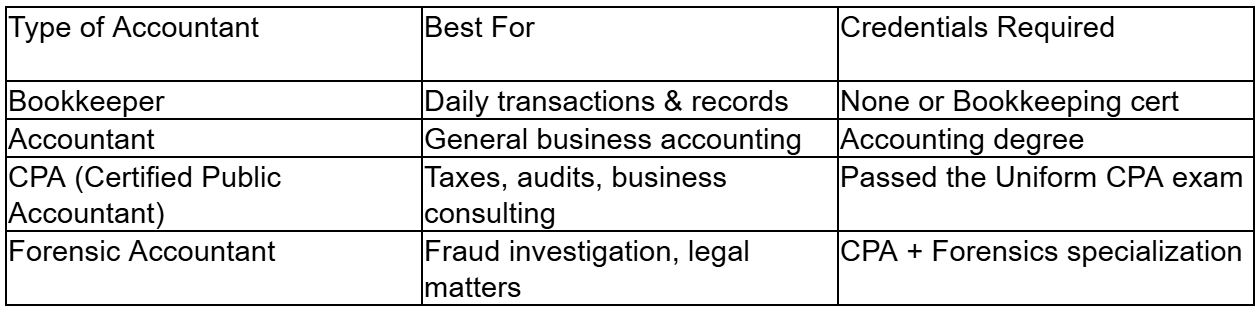
If you're uncertain, a consultation with a Denver-based accounting firm can help you identify your specific accounting needs and determine what’s best for your small business.
Common Accounting Software for Small Businesses
Using accounting software helps automate many routine accounting tasks. It also provides a clear picture of your financials in real time.
Popular tools include:
QuickBooks: Excellent for bookkeeping, payroll, and invoicing
Xero: Cloud-based, user-friendly, ideal for startups and small businesses
Wave: Free software with essential features like invoicing and expense tracking
But even the best accounting software can’t replace professional accounting advice. Many small business owners use these tools and still work with a small business accountant to ensure accuracy.
How Much Does an Accountant Cost?
Wondering how much an accountant charges? Costs vary depending on scope and expertise.
Hourly Rate: $100 to $250 for CPAs
Monthly Retainer: $200 to $1,000+, depending on services
Flat Fees: For specific tasks like tax preparation
So, can you afford an accountant? While it’s an added expense, many business owners find the ROI is well worth it. A good accountant can help you find deductions, stay compliant, and avoid costly errors.
Why Many Small Business Owners Can’t Do It Alone
Many small business owners start out wearing all the hats—marketing, sales, operations, and yes, accounting.
But as your company grows, your accounting needs become more complex.
That’s why professional accountants also function as advisors. They bring financial insight you might overlook when you're busy running the day-to-day operations.
Benefits of Hiring a Small Business Accountant
Saves time and reduces stress
Ensures tax compliance
Helps plan for future growth
Offers strategic guidance
Supports accurate financial reporting
In short, an accountant for your small business becomes a trusted partner in every stage of your business life cycle.
How an Accountant Can Help Your Denver-Based Business Grow
For business owners in Denver, local knowledge is essential. A small business accountant familiar with Colorado regulations, tax policies, and regional market trends can provide targeted, strategic support.
Whether you’re running a startup company or a family-owned business, working with a local accounting firm means:
Access to industry-specific advice
Understanding of local tax laws
Personalized service tailored to your business
An accountant can help your business grow by giving you clarity, compliance, and control over your financial future.
Final Thoughts: Is It Time to Hire an Accountant for My Small Business?
If managing your books is blocking your ability to grow your business, now might be the time to hire an accountant. Professional accounting services go far beyond just number-crunching—they empower you to make informed decisions and plan strategically.
So, ask yourself:
Are your financial records accurate and complete?
Do you feel prepared for tax season?
Can you easily assess the health of your business?
Are you ready to expand or seek funding?
If you answered “no” to any of these, the next step is finding the best accountant for your small business.
Ready to streamline your business accounting and boost your financial confidence? Let AY Miller help support your business with expert guidance rooted in experience and trust.
Follow us for more insights, or reach out to discuss your small business accounting needs today!
