
Hiring a Tax Professional Pros and Cons: Make the Right Money Move Today

Tax season arrives like clockwork, and for many people, so does the annual question: Should I hire a tax professional, or is it better to do it myself? If you’re wrestling with this decision, you’re not alone. Tax filing isn’t just about completing tax forms.
It’s about understanding your unique tax situation, identifying valid deductions, and staying compliant with IRS regulations. Whether your finances are straightforward or more complicated, we’ll help you explore the pros and cons of hiring a tax professional so that you can make the right decision this year.
Let’s dive into what it really means to hire a professional to handle your tax preparation, what kind of expert help is available, and whether this is the smart financial move for you.
The Basics: Who Qualifies as a Tax Professional?
When we talk about hiring a tax professional, we're referring to someone legally authorized to prepare your tax return and represent you before the IRS if necessary. This includes:
Certified Public Accountants (CPA): Licensed professionals who have passed the Uniform CPA Exam. In addition to tax prep, CPAs also offer accounting, bookkeeping, and financial advising.
Enrolled Agents (EA): Authorized by the IRS, these professionals have passed a rigorous exam covering all aspects of the tax code.
Tax Attorneys: Lawyers specializing in tax law, often used for complex tax issues or legal matters involving the IRS.
Annual Filing Season Program Participants: Preparers with credentials under this IRS-recognized voluntary program.
Before you hire a tax preparer, make sure they have a valid Preparer Tax Identification Number (PTIN), which is required by the IRS.
You can use the IRS Directory of Federal Tax Return Preparers with Credentials and Select Qualifications to verify a preparer’s credentials.
Pros and Cons of Hiring a Tax Professional
Let’s look at the pros and cons of hiring a tax expert so you can evaluate whether it’s worth handing over your tax preparation to a professional this year.
Pros of Hiring a Tax Professional
A professional tax preparer often does more than just file forms. Here’s how hiring someone to prepare your taxes may benefit you:
1. Accuracy and Peace of Mind
A tax professional can help you accurately file your income tax, which reduces the risk of IRS audits or penalties for filing errors. Their understanding of tax laws and regulations means fewer costly mistakes for you to worry about.
2. Maximize Deductions and Credits
Many tax deductions and tax credits are overlooked by taxpayers doing their own returns. A preparer will:
Identify deductions related to your employment, child care, home ownership, and retirement.
Understand industry-specific deductions if you’re self-employed or own a small business, like an S corporation.
3. Time-Saving and Stress-Reducing
Rather than researching changing tax laws or filling out complicated tax forms, you can leave tax preparation to a professional who handles it all for you.
4. Help with Complex Tax Situations
Have a rental property, freelance income, investment accounts, or back taxes? A certified public accountant or enrolled agent is trained for complex tax situations and can provide tailored tax help to ensure compliance and optimization.
5. Audit Support and Representation
If you're audited, only certain professionals like CPAs, enrolled agents, or tax attorneys can represent you before the IRS or tax authorities. A qualified preparer provides peace of mind in the event that your tax return is flagged.
Cons of Hiring a Tax Professional
Hiring a pro isn’t the right move for everyone. Here are some cons of hiring a tax preparer:
1. Higher Cost
Perhaps the biggest con: it’s not free. You could pay anywhere from $150 to over $500, depending on:
The complexity of your tax return
Whether you have multiple income sources, like stocks or self-employment
Whether you itemize deductions or rely on the standard deduction
2. Still Requires Your Input
Even with a professional, you’ll need to gather financial documents, review the return, and provide accurate information. A good result still depends on how well you communicate with your preparer.
3. Possibility of Bad Apples
Not every preparer is equal. Some may lack credentials, make errors, or act unethically. If your preparer misfiles your taxes, you’re still legally responsible for the return.
4. Less Opportunity to Learn
Doing your own taxes teaches you valuable knowledge about your finances, deductions, and how tax credits work. Relying on someone else may leave knowledge gaps over time.
Is DIY Tax Software the Better Route?
If your taxes are simple, using tax software might be both cost-effective and user-friendly.
Several tax preparation software options on the market make it easy to:
Input basic income, deductions, and credits
File federal and state returns
Automatically check for errors before submission
Pros of Using Tax Software
Ideal for basic tax situations
Much cheaper: usually under $100
Lets you file your taxes at your own pace
Cons of Tax Software
Limited guidance for tricky scenarios
Harder to navigate tax implications from investments or self-employment
Cannot represent you in an audit
For many taxpayers, using tax software works if your taxes are simple, for example, if you take the standard deduction and have only W-2 income.
When You Might Want to Hire a CPA
Wondering when it's time to hire a CPA or tax advisor? The choice to hire a professional often makes sense when life - and finances - get complicated.
Scenarios That May Warrant Professional Help:
You’ve started a business or need help with S corporation filings
You sold property or have large investment gains
You're managing retirement distributions or planning estate taxes
You recently got married, divorced, or had a child
You received income from multiple states or countries
You received a notice from the IRS or are under audit
A CPA can help guide you through these complex events with long-term tax considerations in mind. They also offer support with bookkeeping, payroll taxes, and financial planning.
Looking for expert guidance locally? You can speak with a seasoned tax accountant in Denver to understand your options based on your unique financial picture.
Red Flags When Choosing a Tax Preparer
When you're ready to hire a tax pro, be on the lookout for these warning signs:
Promises of huge tax refunds without reviewing your records
Charges based on a percentage of your refund
Preparer who refuses to sign the return
No valid PTIN (all tax return preparers with credentials must have one)
Need more help on how to choose a tax professional? Here's a helpful IRS guide on selecting someone you can trust.
Quick Comparison Table: DIY vs. Hiring a Tax Professional
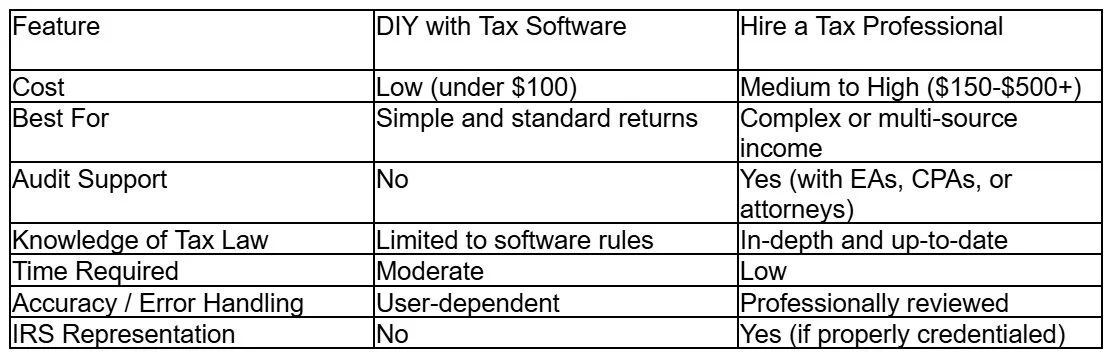
Final Thoughts: Should You Hire a Tax Preparer This Year?
The decision often comes down to your tax situation, budget, and comfort level. If your taxes are simple and you’re confident navigating tax filing software, doing it yourself might save you time and money.
But if you're facing complex tax scenarios, have multiple income streams, or want peace of mind during tax season, hiring a tax professional can truly be a money-saving strategy in the long run.
Plus, the more time you save on doing taxes means more time for investments, your business, or simply enjoying life with less financial stress.
Ready to Make a Confident Choice?
Start by asking yourself a few questions:
Are my finances more complicated this year?
Do I understand the deductions and credits I’m eligible for?
Do I feel comfortable reviewing tax forms?
If you’re unsure, it may be time to consult with a trusted expert. At AY Miller, we're here to simplify the process and help you file your income tax return with confidence.
Need local, approachable, and knowledgeable guidance on tax preparation? Reach out to a tax accountant in Denver today.
Still weighing it out? Bookmark this page, share it with someone who might be struggling with this decision, or follow along for more financial tips from our pro advisors.
Knowledge is the first step in making the right tax move.
